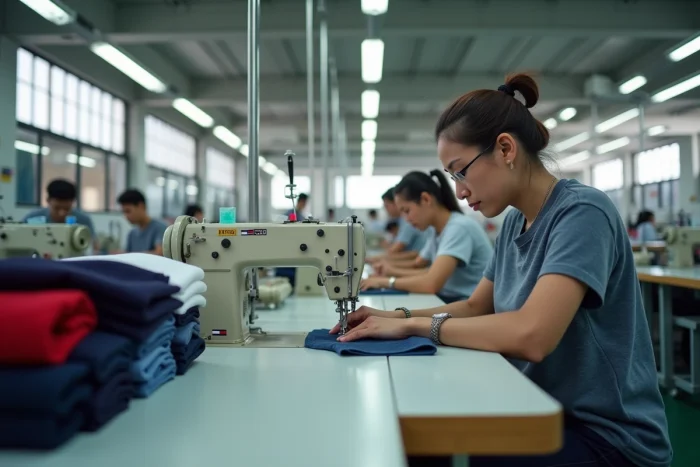
Tommy Hilfiger showcases a distinctly American identity, with its tricolor logo and preppy style rooted in pop culture. The reality of its clothing production tells a different story. The majority of the pieces sold under this brand come from factories located in Asia, while higher-end capsules claim European manufacturing. This duality deserves close examination.
Digital Product Passport and traceability of Tommy Hilfiger clothing
Starting with the autumn-winter 2024 collection, Tommy Hilfiger has begun to apply digital labeling via QR code on certain lines sold in Europe. This pilot initiative, called Digital Product Passport, allows consumers to check the country of manufacture, detailed composition, and supply chain information directly from their phones.
This type of initiative responds to increasing regulatory pressure within the European Union, which is pushing fashion brands to make their supply chains more transparent. For Tommy Hilfiger, it is also a way to address recurring questions about the country of manufacture of Tommy Hilfiger clothing, a topic that has fueled online searches for several years.
The available data does not yet allow for measuring the exact extent of this deployment. The QR code only appears on certain references, and the brand has not communicated a timeline for a rollout across all its collections.
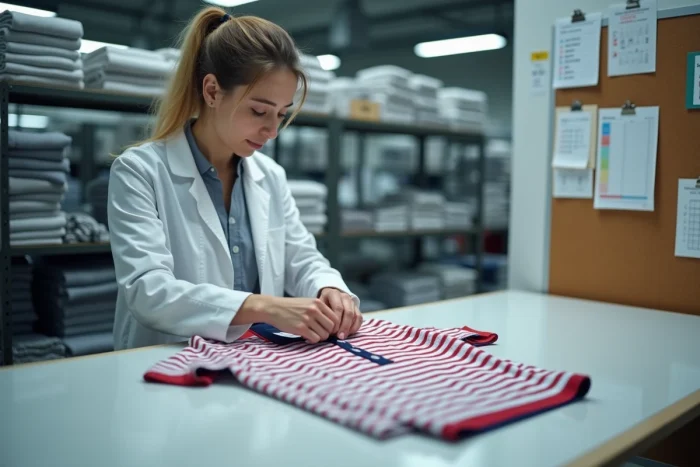
Tommy Hilfiger production countries: Asia, Europe, and Made in Italy lines
The vast majority of Tommy Hilfiger clothing volumes are manufactured in Asia. Three countries concentrate most of this production:
- China, which remains the main supplier for high-volume pieces (t-shirts, polos, standard denim).
- Vietnam, whose textile factories have increased their capacity in recent years and handle a growing share of orders.
- Bangladesh, where production has been regulated since 2021 by the International Accord for Health and Safety in the Textile and Garment Industry, signed by PVH, the parent company of Tommy Hilfiger.
In parallel, the brand launched a line branded Tommy Hilfiger Made in Italy in 2022-2023. This capsule mainly concerns suits and high-end tailoring pieces, entrusted to partner Italian workshops. The stated goal is to reposition part of the offering in a more premium segment, distinct from mass-produced sportswear.
This coexistence of Asian and European supply chains is not exceptional in the industry. It reflects the strategy of many brands that segment their production according to the price positioning of each line.
PVH commitments and control of textile factories
PVH Corp., the parent company of Tommy Hilfiger, joined the International Accord in 2021, the successor to the Rana Plaza Accord. This framework imposes safety audits of buildings, partial publication of the list of partner factories, and mandatory corrective plans in case of shortcomings.
In 2023, PVH renewed this commitment during the extension of the Accord to Pakistan. This renewal means that third-party factories producing Tommy Hilfiger clothing in these countries are subject to regular inspections, focusing on fire safety, structural integrity, and working conditions.
What the Accord covers and what it does not cover
The Accord regulates the physical safety of production sites. It does not address wage levels or brands’ purchasing practices towards their suppliers. Safety audits do not guarantee fair wage conditions, a point that several NGOs in the textile sector continue to raise.
The partial publication of the factory list represents progress compared to the opacity that prevailed before 2013. However, the term “partial” means that not all subcontracting is necessarily made public, particularly second or third-tier workshops.
Quality of materials and positioning between fashion and luxury
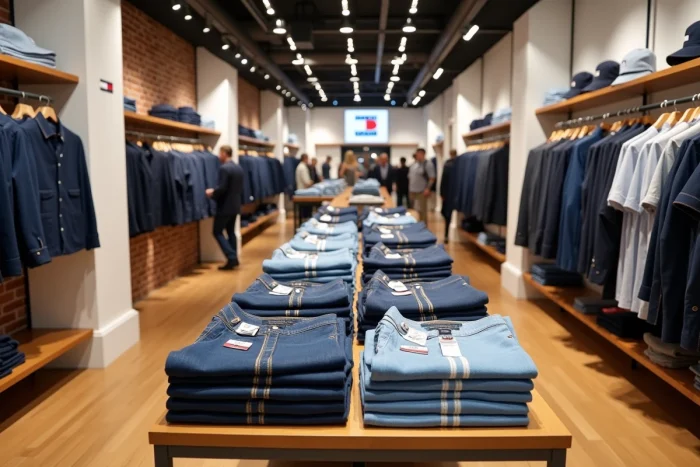
Tommy Hilfiger is not a luxury brand. Its positioning is in the accessible premium segment, between mass-market brands and high-end fashion houses. This market position directly determines the choice of materials and finishes.
The current collections use standard cottons, synthetic blends, and mid-quality denim. The Made in Italy lines use more noble fabrics, with higher-quality wools and cottons, justifying a significantly higher selling price.
The logo, a central element of the brand’s identity, plays a particular role in the perception of quality. The American preppy style that Tommy Hilfiger has popularized relies as much on visual codes (red, white, blue) as on the construction of the pieces.
The spring-summer collections, which represent a significant portion of sales, favor lightweight materials. The difference in quality between Asian and European lines is less noticeable on these pieces than on blazers or coats.
What the labels say (and do not say) about manufacturing
The label sewn into a Tommy Hilfiger garment indicates the country of final assembly. It does not provide information about the origin of the fabric, the source of the buttons, or the location of the dyeing process. A garment assembled in Vietnam may contain cotton spun in India and dyed in China, without these steps being mentioned anywhere.
The Digital Product Passport mentioned earlier could, in the long term, help fill part of this information gap. For now, field feedback varies on this point: some QR codes link to detailed sheets, while others lead to generic pages about the brand’s CSR commitments.
The upcoming European regulation on eco-design and environmental labeling should push all textile brands, including Tommy Hilfiger, to provide more granular information on each step of their production chain. The exact timeline for implementation remains to be confirmed.