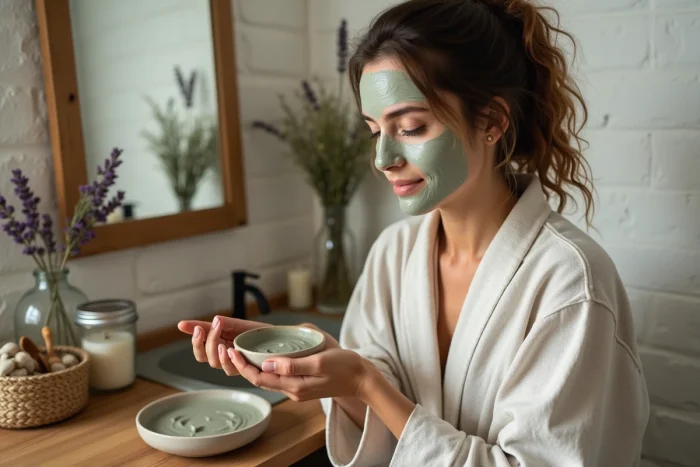
A natural product, in the European regulatory sense, refers to a substance whose ingredients come from the plant, mineral, or animal kingdom, without heavy chemical transformation. Adopting natural products for daily well-being implies understanding what this term encompasses, the real guarantees it offers, and the limits it poses, particularly regarding budget and accessibility.
Health claims of natural products: what European regulation 2026/127 changes
Since January 2026, the European Union has strengthened the requirements for health claims of natural products. Regulation (EU) 2026/127 now mandates clinical evidence for any mention of immune effects on packaging or in commercial communication.
The direct consequence has been measurable: about 15% of non-compliant products have been withdrawn from the French market. For consumers, this regulatory evolution acts as a quality filter. A dietary supplement based on medicinal plants that claims an immune benefit must now prove this effect with clinical data, not just by traditional use.
In practical terms, this means that products still available on the shelves offer a higher level of reliability than what existed before 2026. Brands committed to transparency, such as those listed on sanavitae.fr, help guide consumers toward ranges compliant with these new requirements.
Biodegradability and environmental impact: natural cosmetics versus synthetics
The environmental argument often comes up in discussions about natural care. But beyond marketing, one technical fact deserves attention: according to a study by ADEME published in April 2026, natural cosmetics decompose three times faster in aquatic environments than their conventional counterparts.
This increased biodegradability has a direct impact on water pollution. Surfactants derived from vegetable oils, naturally sourced preservatives, and emollients based on coconut or jojoba oil degrade without leaving persistent residues. Silicones and synthetic polymers, on the other hand, remain in the environment for years.
What this means for a zero-waste beauty routine
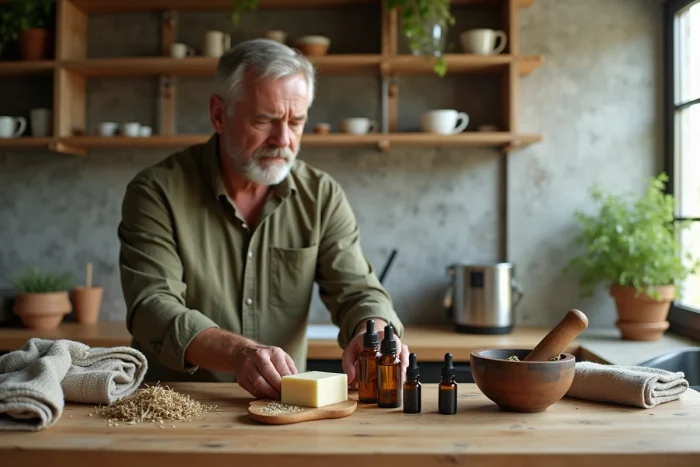
Choosing a solid soap made from natural ingredients or a shampoo formulated without synthetic sulfate reduces the pollutant load of domestic gray water. In a zero-waste approach, the solid format (soap, deodorant, shampoo) also eliminates plastic packaging.
- A superfat soap made from vegetable oils replaces bottled shower gel and degrades quickly after use
- Essential oils used as cosmetic actives (lavender, tea tree) decompose without residue in the natural environment
- Medicinal plant powders (clay, rhassoul) generate no aquatic micropollutants
The goal is not to induce guilt, but to acknowledge that the choice of a natural care product has a measurable effect on water quality.
Sourcing medicinal plants: the tensions no one puts on the label
The market for organic ingredients is undergoing a phase of tension. The FiBL study “Organic Farming in Europe 2025” compiled testimonies from organic farmers reporting a 20% decrease in yields of medicinal plants linked to extreme climate events in 2025.
Prolonged droughts, late frosts, and irregular precipitation have directly affected the production of chamomile, lavender, or lemon balm in Europe. The logical consequence: upward pressure on the prices of plant raw materials.
Regenerative agriculture as a response
In response to this instability, regenerative agriculture practices are developing to stabilize supply. Crop rotation, permanent soil cover, agroforestry: these techniques aim to make plots more resilient to climate variations while maintaining the quality of harvested plants.
For consumers, this translates into increased attention to labels. A certified organic product whose supply chain incorporates regenerative practices offers a better guarantee of availability in the medium term. The Cosmos Organic label or the Nature & Progrès mention remain reliable markers for identifying these approaches.

Natural products and budget: real accessibility according to socio-economic profiles
The idea that natural and organic products are reserved for affluent categories persists. It is based on a partially true observation: at equal volume, a certified organic care product often costs more than a conventional equivalent in mass distribution.
But this unit comparison masks another calculation. A natural product concentrated in plant actives is used in smaller quantities, which alters the actual cost per use. A jojoba oil used as a facial treatment lasts several months. A superfat solid soap replaces shower gel, facial cleanser, and shaving foam.
Prioritize rather than accumulate
The logic of accessibility involves reducing the number of products. Where a conventional routine may include eight to ten references (cleanser, toner, serum, day cream, night cream, eye cream, scrub, mask), a well-constructed natural approach works with four or five multifunctional products:
- A vegetable oil suited to one’s skin type (jojoba for combination skin, argan for dry skin) replaces serum and cream
- A plant hydrosol (rose, lavender) serves as both a toner and a refreshing mist
- Raw shea butter meets the needs of body, hands, and lips
- A superfat soap ensures cleansing for face and body
This refocusing reduces the overall monthly budget while simplifying the routine. The accessibility of natural care depends less on the unit price than on the number of products used.
Organic dietary supplements follow the same logic. The Symrise report from March 2026 notes an increased demand for adaptogenic formulas like ashwagandha, driven by the search for natural solutions to stress. Here too, a single well-chosen supplement often replaces a combination of several synthetic capsules.
Access to natural products for daily well-being ultimately depends on a simple trade-off: understanding what one is buying, verifying regulatory compliance, and reducing the number of references rather than seeking the lowest price per bottle. Supply tensions on medicinal plants and the tightening of European standards make this sorting easier than before, as the products remaining on the shelves have already passed a filter that consumers no longer have to apply alone.