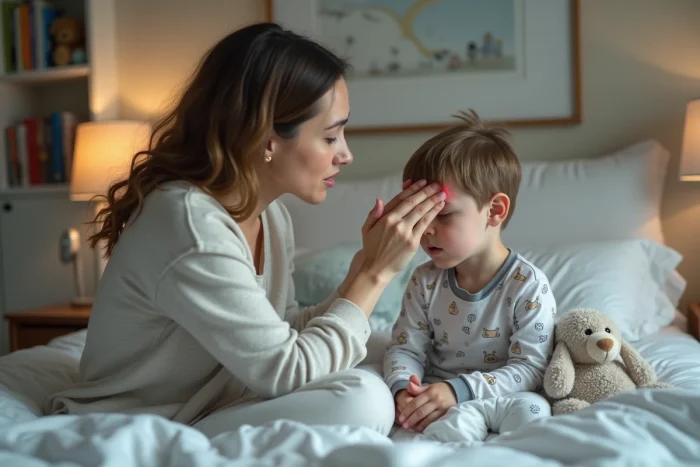
A rule without a decree, a very visible illness, and schools improvising: the management of chickenpox in children in France resembles a game of chess where each move depends on the players, not the manual. While the law remains flexible, practices vary, and parents find themselves at the heart of a puzzle, torn between caution, childcare needs, and school demands.
Chickenpox in children: how to recognize it and understand its symptoms
From a simple chill to an onslaught of red spots, the varicella-zoster virus finds its way into many households each year. After a discreet phase of mild fever, fatigue, and sometimes aches, the characteristic signs never take long to appear: red spots emerge, quickly replaced by vesicles, then crusts. Parents identify this cycle very quickly, as the illness is common from early childhood.
The severity remains variable: some children manage with a bit of discomfort, while others accumulate restless nights under close supervision, especially when they are immunocompromised or, for those around them, if a pregnant woman is unprotected. At home or at school, the question of contagion inevitably occupies everyone’s minds.
The question remains whether, during this period, one can or cannot return to a group setting. can you send your child to school with chickenpox? The answer does not lie in a simple directive, but in a balance of common sense and health recommendations. As long as all the vesicles have not dried up, the risk of transmission remains high, generally seven to ten days. Rarely serious, chickenpox does deserve increased attention among very young children, vulnerable individuals, and certain adults exposed to complications.
Home care: simple actions to relieve your child daily
Against chickenpox, no antibiotic is effective: we therefore rely on what family medicine has best to offer, which means simple and regular actions to avoid any risk of superinfection.
To lower a moderate fever, using paracetamol is sufficient. Aspirin, on the other hand, is prohibited: it poses a risk of severe complications. For the skin, gentleness prevails: daily lukewarm baths, moisturizing soap, and gentle drying by pressing all contribute to limiting itching and preserving the skin barrier.
To navigate the illness with fewer inconveniences and avoid secondary troubles, certain actions prove invaluable:
- Keep nails short to reduce scratches and the risk of infection with the slightest itch.
- Change sheets, pajamas, or clothes daily to ensure a clean environment.
- Pay special attention to sensitive areas, the face, and extremities, and remember to differentiate chickenpox from outbreaks of other infections like hand-foot-mouth syndrome.
If despite everything the child cannot stay still, a doctor may prescribe an antihistamine to soothe the itching. For more fragile children, monitoring concerns both fever and the evolution of the spots. Being vigilant for the slightest superinfection helps avoid many additional inconveniences. Daily life may seem heavy, but it is this support that protects children from more severe episodes.

School or rest at home: what do the rules say about chickenpox and group settings?
As chickenpox cases arise, the question of returning to school stirs families: should they keep their child at home or let them return to classes? In France, there is no national guideline that mandates systematic exclusion. The decision is a compromise, often determined by the tolerance of each institution and the household situation.
Knowing that contagion begins even before the appearance of spots, the isolation policy does not stop the virus’s spread as effectively as one would hope. However, most schools recommend temporary exclusion to protect particularly at-risk individuals in the school environment.
Here are the situations in which staying at home is necessary:
- In case of contact with an unprotected pregnant woman or an immunocompromised child, caution must take precedence.
- An altered general state, high temperature, prostration, infected lesions, justifies without hesitation resting quietly.
There is no strictly defined timeframe for returning to school. Typically, it is decided when the fever has disappeared and all the vesicles are dry. Vaccination, now reserved for certain populations or specific cases, primarily protects those most vulnerable to complications.
Aside from a few specific situations, group settings remain accessible as soon as the child feels better and is no longer contagious. However, in practice, most parents and teachers prefer to wait for complete recovery before any return. This is often the least anxiety-inducing option for everyone.
Chickenpox means school or home, but never without a shared uncertainty. Each moves forward at their own pace, between vigilance and adaptation. And then, there will come the morning when the child, free of their crusts, will return to school, a quiet witness to a seasonal epidemic that gradually fades away.