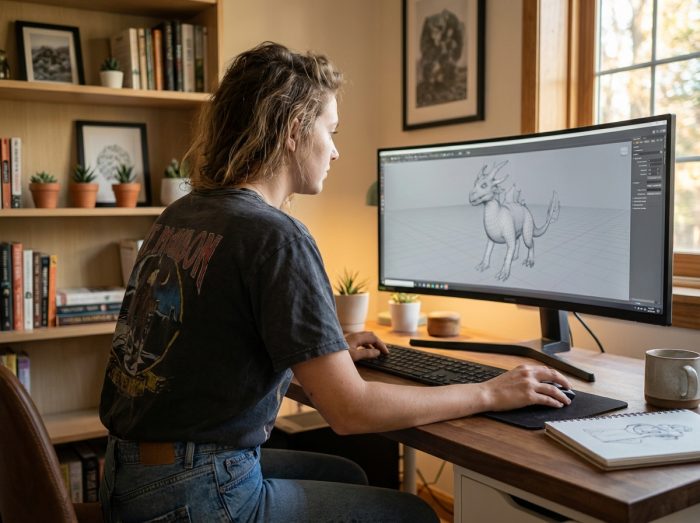
Some advance faster by accumulating fewer hours, simply because they have understood how to master the tools rather than exhausting themselves on every detail. Keyboard shortcuts, often overlooked in favor of the temptation of menus, can transform the chore of repetitive tasks into an efficient routine. Working on manageable projects, rather than aiming for a masterpiece right away, multiplies victories and preserves enthusiasm.
The most popular online tutorials often skip the basics, leaving beginners facing difficult blocks to resolve. Allowing oneself short and regular sessions, instead of imposing sleepless nights, proves to be much more rewarding in the long run.
Who is 3D animation for? Demystifying the first steps
3D animation brings together both fans of animated cinema and enthusiasts of video games or motion design. In studios, profiles intersect:
- Graduates from recognized schools like Gobelins or ESMA,
- Self-taught enthusiasts,
- A diversity of backgrounds, all driven by the desire to bring characters and settings to life.
The door is not reserved for a handful of insiders. Curiosity and the willingness to gradually acquire the fundamentals of animation, timing, anticipation, exaggeration, squash and stretch, are enough to lay the first stones. There’s no need to spend hours manipulating Maya, Blender, or Cinema 4D from the start. The essence lies in the logic of the tools, understanding character rigs, and careful observation of movement.
Fortunately, modern software, whether open source or paid, offers educational interfaces, ready-to-use models, and tutorials that facilitate learning. After Effects and Premiere Pro also help bridge the gap from motion design to advanced 3D animation.
The question often arises: how long before seeing results in 3D animation? It all depends on commitment, practice frequency, and the relevance of chosen resources. Some see their first character come to life after a few weeks of regular practice, while others refine their facial animations for months. This journey is built step by step, thanks to feedback from others and the gradual construction of a solid portfolio. In Paris and elsewhere, studios and agencies primarily seek a sensitivity to storytelling through movement, not sleepless nights sacrificed on the altar of performance.
Do you really need to pull all-nighters to progress? Smart tips to advance without exhausting yourself
Advancing quickly in 3D animation does not rhyme with repeated all-nighters. Those who achieve lasting progress rely on regular practice, not marathon sessions. Repetition, reviewing the fundamentals, timing, anticipation, staging, and alternating between active learning and breaks allow for better assimilation. Testimonials from French animators confirm this: knowing when to stop, letting ideas rest, accelerates the understanding of tools and techniques.
Everyone must find their own pace. Engaging in short sessions, choosing targeted tutorials, and multiplying concrete exercises: over time, this method far outweighs the race against the clock. Online courses, modular classes, or tutorials provide the freedom to progress at one’s own pace, to revisit a technique without discouragement. Build your portfolio gradually, even with small animations or experimental tests: it’s this logbook that captures recruiters’ attention.
Here are some effective levers to progress without exhausting yourself:
- Break down difficulties: focus on one principle at a time, or on a specific effect in a short animation.
- Immerse yourself in competitions or communities: collective dynamics foster learning and prevent isolation.
- Talk to seasoned professionals, analyze their feedback, adjust your way of working.
Practicing often, enriching your portfolio, participating in competitions or internships, exchanging in communities: this is what helps you advance without exhausting yourself. Studios do not want keyboard Stakhanovites, but enduring creators capable of renewing their inspiration and showcasing their personality.

Resources, tips, and communities: everything you need to stay motivated and go further
Becoming comfortable in 3D animation requires much more than a software or a tutorial found on YouTube. There is a wealth of resources: guides on fundamental principles, specialized forums, animator communities, webinars, training platforms, testimonials from professionals in studios. Each of these tools helps refine your technique, stay connected to software developments, and avoid feeling overwhelmed by complexity.
In France, there are vibrant networks that bring together students, self-taught individuals, and seasoned experts. These exchange spaces allow for sharing tips on Blender or Maya, dissecting rigs, comparing methods of motion design and 3D animation. In these groups, often led by professionals, you receive precise feedback, identify areas for improvement, and draw inspiration from others’ creations.
Here are several avenues to reinforce your skills and stay on track:
- Explore forums on 3D animation: you’ll find technical discussions, methodological advice, and real-time feedback on projects.
- Try weekly challenges to maintain motivation and test new styles.
- Join local or online groups: ideal for expanding your network and seizing collaboration opportunities with studios.
To progress, nothing replaces mutual support. Feedback from peers, confronting viewpoints, access to shared resources makes a difference. Motivation is cultivated through exchange, active curiosity, and variety of approaches. Ultimately, 3D animation is less a race against time than a collective adventure, where each progress feeds the desire to go further.